Search Website
Close
-
YMCA
-
About Us
-
Campaigning
-
YMCA during war
Back -
-
What we do
-
Get Involved
-
Shops
-
YMCA
-
About Us
-
Campaigning
-
YMCA during war
Back -
-
What we do
-
Get Involved
-
Shops
A great many young people have probably had personal experience of ‘food insecurity’ without actually knowing that the term applied to their situation. Maybe you’re one of them.
Food insecurity is being short of food, uncertain where your next meal is coming from, not having nutritious food, and suffering health problems as a result.
All of these problems are aspects of food insecurity. And like many other problems it all comes down to being short of money, either because you don’t earn enough if you have a job, or because the benefits system and the way it’s paid makes it difficult to manage your finances.
In this piece we’ll go through what food insecurity is in a bit more detail, what causes it, its effects, and what help there is if you’re affected by it.
What is food insecurity?
Food insecurity can be caused by a wide range of circumstances that come down to the fact that you’re not getting enough to eat. Most often it’s because you don’t have enough money to buy food, so you maybe skip meals, eat smaller portions, or simply don’t have access to a regular supply of food.
Even if you do have access to food, it may be of poor quality and not very nutritious; this is why food insecurity can so easily lead to nutrient deficiencies and other health problems.
Some young people think food insecurity means being anxious about eating disorders, but when you’re worrying about where your next meal is coming from, the ‘insecurity’ involved can understandably leave you feeling stressed, anxious or worse.
What causes food insecurity?
Many factors together can contribute to food insecurity, but in general it’s the cost of living, inflation, rising food and energy prices and fuel costs, all adding up to higher prices for everything.
For young people it can mean having to choose between what they spend on food, accommodation, heating and cooking, entertainment, travel and clothing.
Many are probably reluctant to use their cooker and instead spend money on expensive takeaways that don’t provide the nutrition they need.
As for the welfare assistance they so desperately need, many vulnerable young people miss out on the financial support they’re entitled to simply because they’re unaware it’s available.
The way the benefits system is paid and managed, the low rate of benefit, the five weeks wait for the first Universal Credit payment, and the rules for working while living in supported accommodation – all can add to your financial problems.
Impacts of food insecurity
It’s not uncommon for many young people to find themselves reduced to just one meal a day, or sometimes not eating at all some days.
This means one of the most worrying effects of food insecurity is poor health when you can’t afford fresh fruit and vegetables, and other dietary essentials necessary to maintain nutritional health.
It’s a problem of particular concern for people with physical health issues who depend on a specific diet to manage their symptoms, but can’t afford to.
Another downside is that a lot of young people don’t know how essential a healthy diet is, so rather than trying to eat healthily, instead spend money on more tasty fast food or cheap snacks.
Homeless young people are also often placed in temporary accommodation with poor cooking facilities where they have to manage on very little money, adding further to the likelihood of an unhealthy diet.
All of these factors can have a cumulative effect on their physical and mental health.
Is food insecurity the same as food poverty?
It’s probably the case that many young people, as well as many adults, are unsure of what the term ‘food insecurity’ means, but are more likely to understand the term when it’s used interchangeably with food poverty.
The real difference between these two terms is that food poverty means you simply can’t afford enough good, nutritious food, while food insecurity refers to the reason why you can’t get enough good, nutritious food.
How YMCA is helping young people with food insecurity
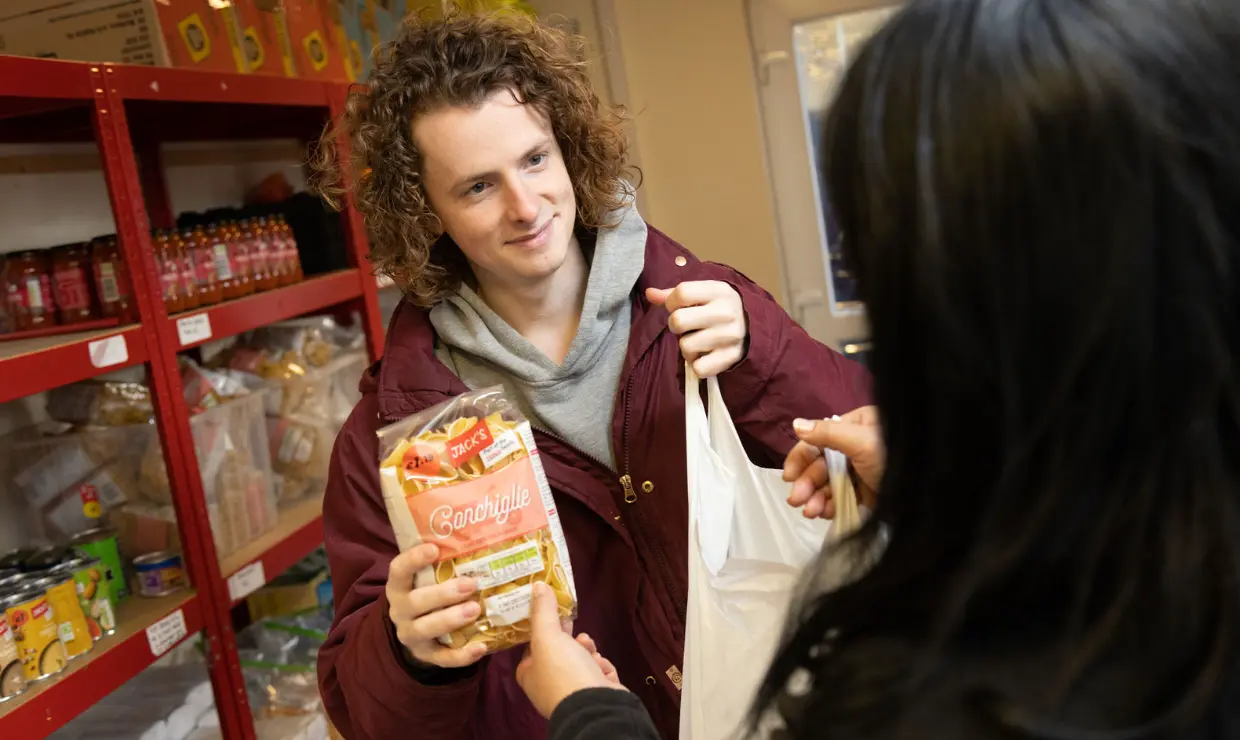
There are various ways that YMCA are helping with this problem. These include collaborating with organisations such as food banks and pantries. For example, YMCA North Staffordshire’s “Your Local Pantry” provides access to essential groceries. These are often linked to membership programs that include volunteering and training.
Another important way YMCA help is in advocating for government policy changes to improve the existing benefits system, so young people will have enough financial help to cover their basic needs.
The training and skills development programs provided by YMCA are also extremely useful in helping young people gain skills, making it easier to find employment and become more financially secure.
And of course, YMCA are renowned for providing a safe and supportive environment for homeless young people, those with housing problems or other challenges.
By working to create youth-friendly communities, YMCA builds environments where young people feel valued, included, and have a voice, promoting positive relationships and opportunities, besides offering emotional support, life skills training and assistance in accessing other services.
Food banks and pantries
Food banks and pantries provide emergency food and support to individuals facing food insecurity. 7,693 people participated in food banks and pantries provided by YMCAs across England & Wales, allowing access to emergency food parcels and other support services.
The Trussell Trust also runs a network of 1,400 food bank locations across the UK, supported by thousands of volunteers and community groups across the UK. They are there to help anyone who is facing hunger, and can help you find out where to get a food voucher for emergency food.